The Strait of Gibraltar is one of the Ocean’s Seven, which is a list of seven channels around the world which many marathon swimmers are attempting to complete. I am not one of them, but this swim has been on my bucket list. Unfortunately, this swim has one of the longest waitlists, and for good reason. The local organizing body does something smart to manage the backlog — they seek to group four equally paced swimmers together to cross in tandem, effectively quadrupling their throughput. It’s a clever solution, but it comes with its own complexity to an already complicated swim. Even two swimmers swimming in sync is a challenge. Four? That’s next level. Even if you train together daily and are perfectly matched on your swim pace, every swimmer has their own peaks and valleys throughout a long open water swim.
Elizabeth Almond had asked me two years ago if I was interested. Hell yes I was. I sent her my passport and fully expected to wait five years. Then on January 16th, 2026 the text came. We were in. The excitement hit immediately, followed closely by nerves. Liz is a bit faster than me, and I knew this would push me. But that’s exactly the kind of challenge I live for. The remainder of the team was still to be determined due to various injuries, ability to travel and wait for the window.
The Team
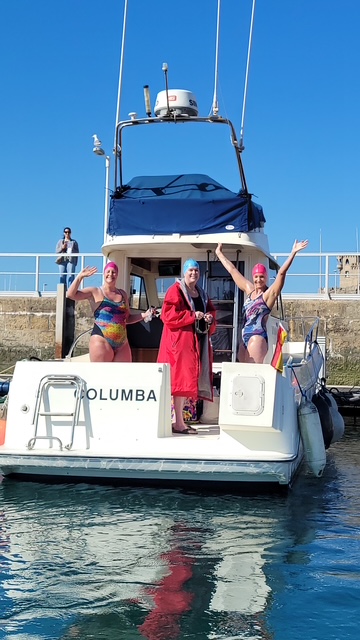
God bless Liz — and Jeff, her husband — for managing the team logistics leading up to this swim. It is genuinely stressful work that rarely gets acknowledged. The roster shifted multiple times in the months before our window. We finally locked in four people, felt good about it, and then one dropped the day our window started due to a family emergency. We went from four to three. Disappointing, but you adapt. That’s open water swimming.
The Channel and Its Conditions
Tarifa is a windy town. Like, legendarily windy. It is considered one of the premier destinations in the world for kiteboarding, which tells you everything you need to know about what we were dealing with. The wind was relentless throughout our waiting window, which ran from March 29th through April 9th. And the forecast constantly changed as it does. It’s pointless to even look more than a day or two out.
The requirements for a sanctioned crossing are pretty specific. The Spanish and Moroccan supporting bodies look for a minimum swim speed of 3km/h, at least 5 miles of visibility, winds no greater than 10 mph, and winds coming only from the west. Add to that the constant navigation around major shipping vessels – this is one of the busiest maritime corridors in the world — and the water temperature, which in April sits around 62°F. For this San Francisco Bay Area swimmer and South End Rowing Club member, that’s downright balmy!
Some of my teammates had been watching the wind forecasts for months. Weeks. Days. Me? I’ve learned to let that go. There are three things I try not to fixate on: wind, weather, and land. Wind and weather are constantly shifting. Mother Nature has a mind of her own and she changes it often. Land across open water is one of the most deceptive things there is — it always looks closer than it is. Look at the boat not at the land. My philosophy is simple: trust the pilots, trust the process, pray for favorable conditions. These are people who have guided swimmers across this channel for years. They know things that no forecast can tell you. Truth be told, I do just a little research before my swim events. I know I am going to swim from point A to point B and follow the boat. For me, this helps manage the anxiety as I prepare for my big swim events.
The Green Light
Our window opened on Thursday, April 2nd. We got our confirmation at 7pm Wednesday night when the updated wind forecast came in and were told to be at the boat by 10:45 AM Thursday. Prior to this, we had a thorough briefing on Monday to walk through all the logistics, safety, feeding protocol, what to expect in each phase of the crossing.
Thursday morning, we arrived to find the team deliberating. The forecast had ticked up slightly overnight and the call to go wasn’t clear. We started getting ready anyway — sunscreen, anti-chafe lube, the whole pre-swim ritual — half expecting to be told to the swim was not to happen as planned. We sat. We waited. About ten minutes passed, and then the thumbs up came. Conditions weren’t perfect, but our team of three felt confident and never doubted that we could handle it.
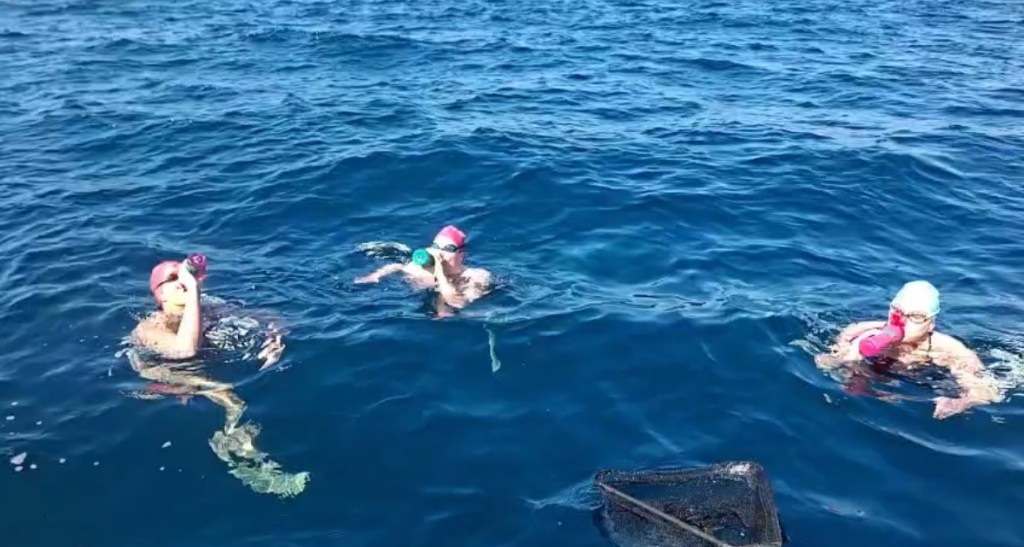
We handed our feeds to Jeff, who would be managing nutrition from the smaller inflatable while we followed the larger vessel plotting our course. Currents in the Strait can reach 3 knots, and the feeding windows are tight — they want each stop to be under one minute. We were all on liquid nutrition for exactly this reason. It is the fastest way to get your key nutritional components down – hydration, calories, carbs and electrolytes. I used NeverSecond throughout the swim, and the team agreed to feed only on the hour given the currents. I typically feed every 30 minutes, so this was a meaningful test — and great preparation for the English Channel in July. The weeks leading up to this attempt, I switched up my feeding ensuring I still could get the critical calories needed on each feed since we were feeding on the hour. I changed my bottle to a wider mouth as well so I could feed quickly. Many marathon swimmers underestimate their nutrition. Through my coaching, crewing and observing many swims, I have seen not nailing down your nutrition to be one of the biggest variables to impact a swimmer’s ability to complete ambitious channel swims. It takes a ton of testing and learning of what works for each swimmer as everyone is very unique.
One key briefing point stayed with me: the first hour out of Tarifa and the last hour approaching Morocco are critical. Stop during either of those stretches and you risk getting swept by the current and never making land. No Stopping, just dig deep and go!
Into the Water
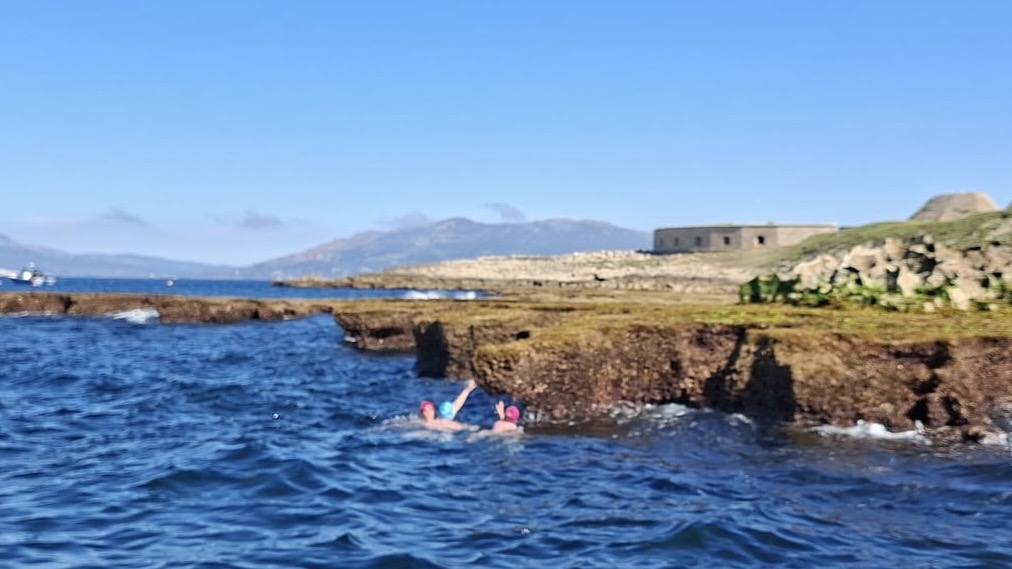
We launched from the tip of Tarifa, and swam out to touch the rocky shoreline. The rocks on the point were very jagged, and many swimmers have gotten injured touching the rock. We were told to touch with our arm extended as far as possible and touch only with the hand. Once we all touched the rock, the whistle blew. Let’s GO!
I knew from the start that I needed to hold pace — not just for myself, but for the team. We had done a test swim together beforehand and dialed in our formation. Since I was the slowest, I led setting the pace. Liz swam to my left since she typically only breathes to her right and could sight on me and Sian since the inflatable was to be on her left. Sian swam to my right and I was to be positioned ever so slightly ahead of them. It worked beautifully. Dream team doesn’t even cover it.
At our first feed stop, we got the news: we had already covered 4km. We were flying. A quick refuel and we were off again, no time wasted.
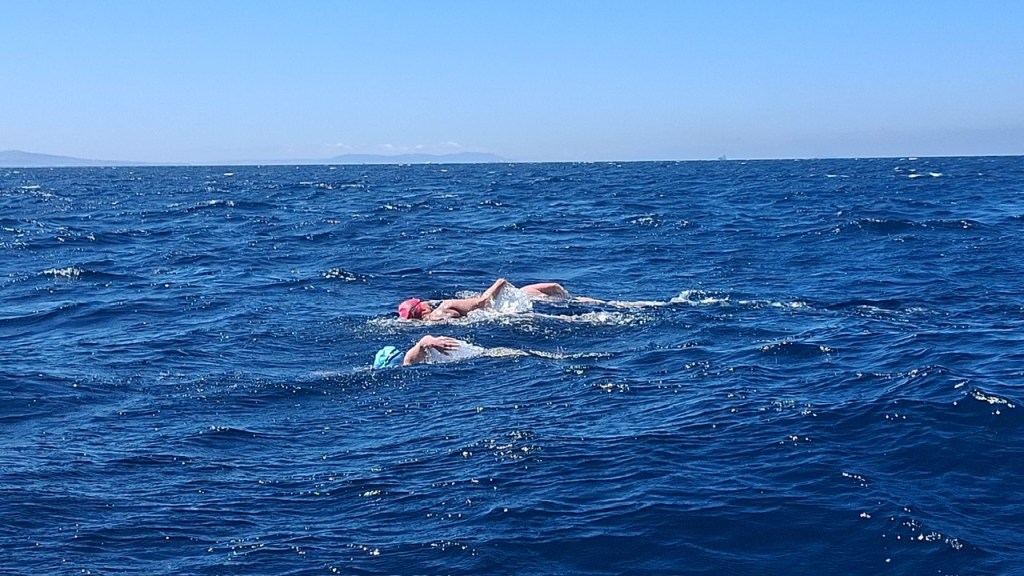
It was a truly magical experience mid-channel. The water was stunning. Deep, vivid blue beneath me, with shafts of sunlight cutting through at angles that made the whole thing feel otherworldly. Every breath I took, I was looking up at the open sky. I remember constantly smiling in the water. Breathing to my right, there was Sian. Breathing to my left, there was Liz. I was in my absolute happy place, floating between two legendary swimmers in one of the most famous stretches of water on Earth.
We had a wee bit of chop along the way. Passing vessels kicked up waves to bodysurf, which was a delight. The wind was mostly to our backs and gave us a welcome push. Another hour disappeared, and we stopped for our second feed. That’s when Fernando, on the inflatable, did a flamenco dance. No explanation needed. That man was happy with our progress!
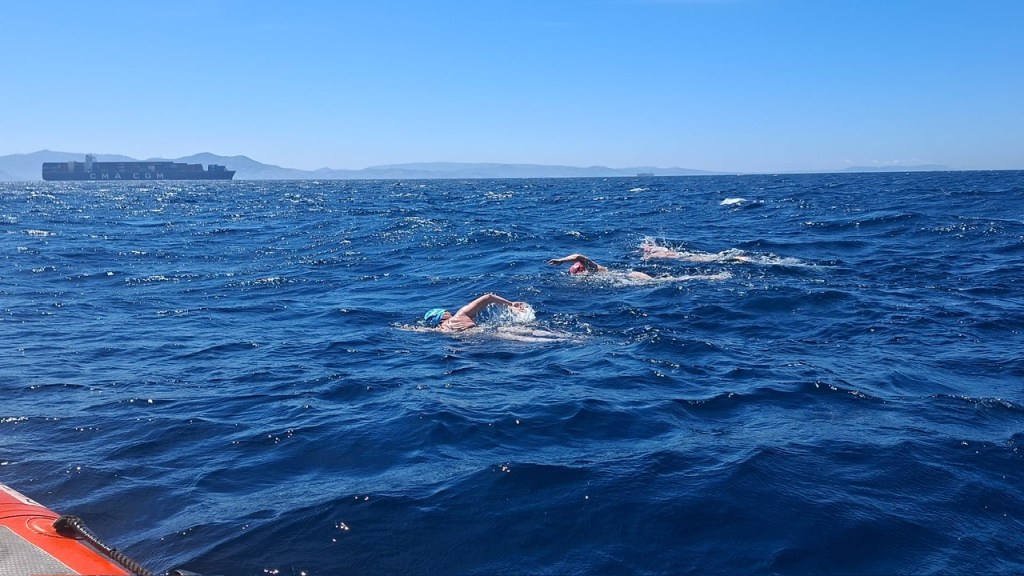
Then the dolphins came. I had heard them singing under the water several times earlier in the swim but had not yet been graced with a visit. A pod appeared to my right, some of them leaping out of the water. Then two glorious dolphins were just below me, dancing below as if checking in. They seemed as if they were glowing from the sun beams lighting them up below the surface. I don’t know how else to say it — it felt like a blessing. Like the ocean was rooting for us. That all my loved ones were rooting for us. That the universe was rooting for us.
The Final Push
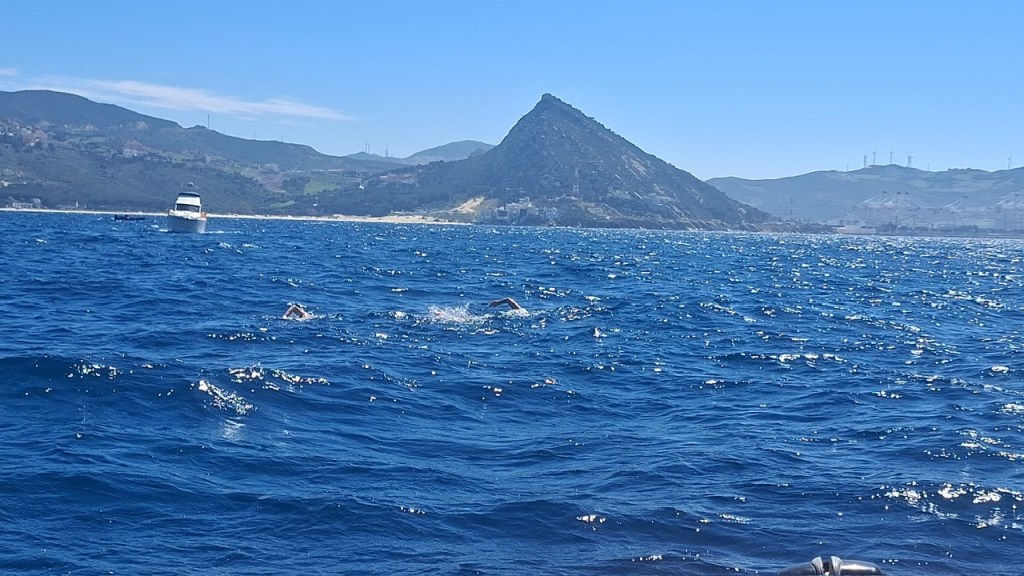
As Morocco grew larger on the horizon, I knew we were close. Yes, even I get caught looking at land. At this time, I also felt the shift in the water. The side shore current near the Moroccan coast is aggressive, and they had warned us: no feeds in that final stretch so the last hour and twenty minutes there was no opportunity to feed. You don’t stop. You don’t slow down. You want to have some reserves and another gear for the end. You just put your head down and you earn it.
We earned it.
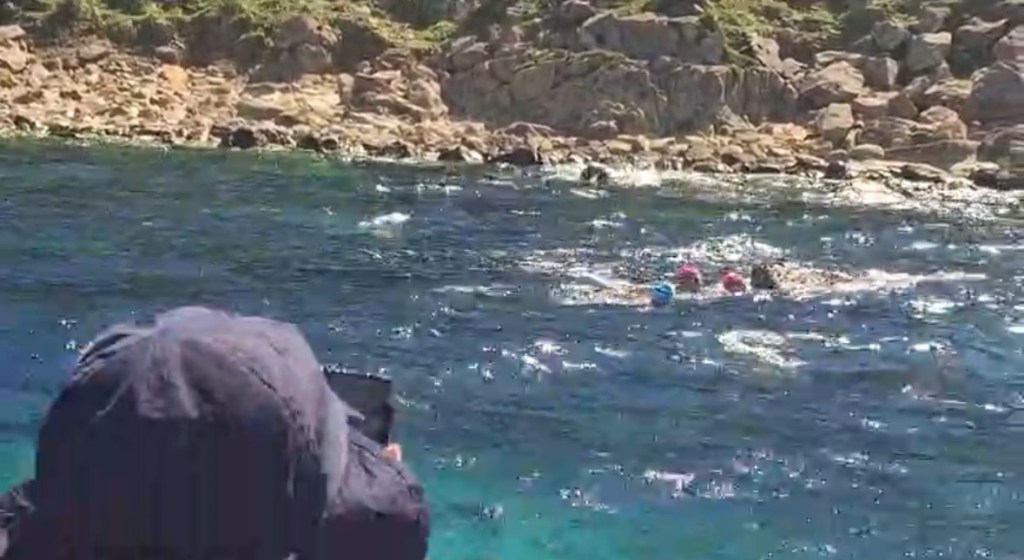
Thankfully all three of us hit that last hour with something left in the tank. Similar to the Spanish coastline, the coastline of Morocco was rocky — too rocky to actually step ashore — so we gathered around a rock just off the beach and touched it together. Four hours and twenty-three minutes after leaving Spain, we were in Morocco.
The People Who Made It Happen
I can’t say enough about the ACNEG Strait of Gibraltar Swimming Association. Laura handled organization and communication with grace and professionalism — she ran a detailed briefing and kept everything running smoothly. Captain Cristina was exceptional at the helm. Fernando kept us safe, fed, and entertained from the inflatable. And Liz and Jeff — from the initial invitation two years ago to every logistical headache along the way — made this whole experience possible. And Sian, our amazing swim partner who was an absolute joy, full of energy and light!
We were the first swim of the 2026 season. The team wanted that first crossing to be a success, and it was. The very next day, a group of swimmers from Ireland crossed successfully too. The season is off to a tremendous start, and I wish all the swimmers of 2026 calm winds and successful swims!
Open Water Swim Coaching Available!
Whether you’re just curious about marathon swimming or you’ve been at it for years — I am here to help you succeed.
Marathon swimming is one of the most rewarding journeys you can take, and having the right support along the way can make all the difference.
I love working with swimmers at every stage — those taking their first exciting steps into marathon swimming, transitioning from triathlons to open water and seasoned marathon swimmers who are ready to work through challenges and make the tweaks needed to put you in a position to succeed. Wherever you are, I will meet you there.
And since all coaching is done virtually, distance is never a barrier.
If you’ve ever thought “I wonder if I could do that” – the answer is yes, and I’d love to help you get there.
→ Reach out today. Free 20-minute consultations available.
 Green Swimmer Girl
Comments